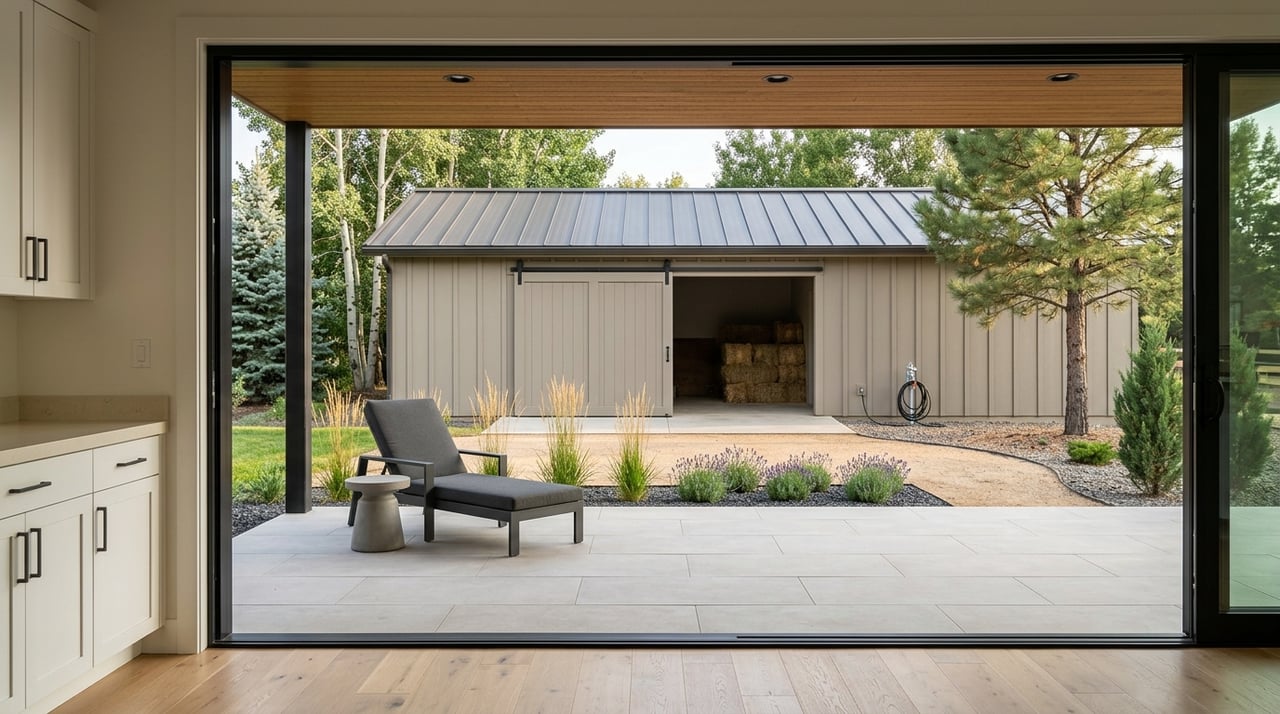
Dreaming about a little more elbow room in Parker? If you are picturing a home with land, space for horses, or a quieter rural feel without losing access to the Denver metro, you are not alone. Acreage living in and around Parker can be rewarding, but it comes with different rules, utilities, and upkeep than a typical subdivision home. This guide will help you understand how acreage and equestrian ownership work locally so you can make a more confident move. Let’s dive in.
Parker acreage starts with location
Parker sits about 20 miles southeast of Denver in Douglas County, and the Town of Parker reports 22.4 square miles and an estimated 72,147 residents within town boundaries as of January 1, 2026. The town also highlights a trail system that supports biking, hiking, skating, and horseback riding. That mix helps explain why Parker appeals to buyers who want both suburban convenience and outdoor access.
If you are searching for acreage, the exact location matters. Parker’s 2024 Three-Mile Area Plan shows that land around town includes unincorporated Douglas County enclaves with rural residential, agricultural, farming, and other lower-density uses. In practical terms, that means horse-friendly and acreage-oriented properties are often found near the edges of Parker or outside town limits rather than in the more built-out core.
Town limits versus county property
One of the first questions to ask is whether a property is inside the Town of Parker or in unincorporated Douglas County. That answer can shape what you can do with the land, what utilities serve the property, and which local rules apply. It can also affect your expectations for roads, setbacks, and animal use.
Within the Town of Parker, the municipal code says keeping or raising animals is allowed only as an accessory use on lots with an occupied dwelling unit and must follow town animal and zoning rules. The code also says livestock or fowl may be kept only if the owner complies with town requirements. So if horses are part of your plan, you will want to verify the specific parcel rules early.
Equestrian living depends on parcel size
For many buyers, the real appeal of Parker acreage is the equestrian lifestyle. Douglas County’s animal zoning rules offer the clearest local picture of how that works. Section 24 is organized by parcel-size tiers, and the flexibility generally increases as acreage increases.
That matters because a five-acre dream and a ten-acre dream may not function the same way from a land-use standpoint. The county rules are much more permissive on rural parcels than on smaller suburban lots, especially in the 9+ acre, 35+ acre, 80+ acre, and 160+ acre tiers. If you want horses, boarded horses, or supporting structures, parcel size is not just a nice detail. It is a key part of your due diligence.
Structures and site rules matter
Horse ownership is about more than whether animals are allowed. Douglas County’s Section 24 also sets setbacks for barns, corrals, arenas, paddocks, and parking areas. Those standards can affect where you place improvements and whether an existing setup fits your needs.
The same rules require vegetative groundcover on livestock sites and say manure should be removed regularly or managed in a way that protects surface and groundwater. The county also states that manure may not be buried. These are practical ownership issues that can shape your maintenance routine and long-term costs.
Trails add to the lifestyle
Part of the appeal of owning horses near Parker is access to places where you can actually enjoy them. Parker says it has a trail network that includes horseback riding, and Douglas County’s East/West Regional Trail is open to equestrian users. Parker planning materials also identify Salisbury Equestrian Park.
For some buyers, nearby riding amenities are just as important as the home itself. A beautiful barn setup may check one box, but access to equestrian-friendly trails and parks can make day-to-day ownership much more enjoyable. That is why lifestyle fit should be part of your home search, not just square footage and lot size.
Utilities can vary by parcel
Acreage shopping in Parker often means looking beyond a simple public water and sewer assumption. Water and wastewater service is not uniform across acreage areas. Parker Water & Sanitation District serves the Town of Parker, the City of Lone Tree, the City of Castle Pines, and portions of unincorporated Douglas County, but not every parcel will be served the same way.
The Town’s Three-Mile Area Plan also maps many separate water and sanitation districts. That is an important reminder that service needs to be confirmed property by property. Two homes that look close together on a map can have very different utility setups.
Septic should never be an afterthought
In rural or semi-rural Douglas County, septic is a major ownership issue. The county’s OWTS rules require a valid permit before installing, altering, repairing, or using an on-site wastewater treatment system. A property sale can also trigger a use permit or renewal.
If an inspection finds deficiencies, repairs or a conditional permit may be needed before closing or shortly after occupancy. For buyers, that means septic is not just a box to check. It can directly affect timing, budget, and negotiations.
Road access is worth a closer look
A long driveway and open views can be part of the acreage charm, but access deserves careful review. Douglas County says it maintains 592 lane miles of gravel roads. At the same time, the county notes that many private gravel roads are not maintained by the county.
The county’s private-road standards say private roads are not maintained or assumed for maintenance by the county unless they are brought up to county standards at the owner’s or developer’s expense. In plain terms, you will want to confirm whether access is public, county-maintained, or private before you fall in love with a property. That answer can affect maintenance expectations and future costs.
Acreage ownership means more hands-on upkeep
Acreage living often offers privacy, flexibility, and room to spread out. It also usually means more responsibility than a standard in-town lot. Between livestock rules, site maintenance, road questions, septic systems, and wildfire planning, you are managing more moving parts.
That does not make acreage a bad fit. It simply means you should go in with clear eyes. The right property can be a great match when your land, budget, and lifestyle goals all line up.
Wildfire planning is part of ownership
Douglas County says wildfire is the county’s number one natural hazard. Parker’s current building-code page also lists the 2025 Colorado Wildfire Resiliency Code as an active code as of June 30, 2026. On larger lots, that can make defensible space, vegetation management, and code compliance more relevant than they might be on a smaller suburban property.
If you are evaluating barns, fencing, or accessory structures, wildfire-related requirements should be part of the conversation. This is another reason acreage buyers benefit from a thorough, property-specific review instead of relying on assumptions.
Smart due diligence for Parker acreage
Because acreage properties can vary so much, broad descriptions only go so far. Parker’s Three-Mile Area Plan warns that its map is for visual representation only and that site-specific surveys are required to verify parcel data. That is an important reminder to verify details carefully.
As you compare options, focus on the questions that matter most:
- Is the property inside Parker town limits or in unincorporated Douglas County?
- Are horses allowed under the current zoning?
- If horses are allowed, are there parcel-size or structure limitations?
- Is the home served by district water and sewer, or does it use septic?
- If there is septic, are permits and inspections current?
- Who maintains the road access?
- Are there wildfire mitigation or building-code requirements that affect the property?
A good acreage purchase is often less about finding the flashiest listing and more about confirming that the property truly supports the way you want to live.
Why local guidance matters
Buying acreage or an equestrian property around Parker is rarely as simple as buying in a typical subdivision. You may be balancing zoning, utility districts, septic review, road access, and long-term maintenance all at once. Having a calm, experienced process can help you avoid expensive surprises and focus on properties that fit your goals.
Whether you are looking for room for horses, more privacy, or a property with long-term flexibility, the details matter. If you want help evaluating acreage options in Parker and the surrounding Douglas County area, connect with Laura Cantalamessa for clear, experienced guidance.
FAQs
What makes Parker, Colorado appealing for acreage buyers?
- Parker offers access to Denver-area convenience along with trails, open-space amenities, and nearby rural areas where acreage properties are more common.
Where are equestrian properties usually found near Parker?
- Horse-friendly acreage is often more likely to be found near Parker’s edges or in unincorporated Douglas County rather than in the more urban core of town.
Do Parker, Colorado acreage homes always allow horses?
- No. Horse and livestock use depends on whether the property is in town or county jurisdiction, the zoning, and the parcel size.
Why does parcel size matter for Douglas County horse properties?
- Douglas County’s animal zoning rules are organized by parcel-size tiers, and larger rural parcels generally have more flexibility for horses, livestock, and related structures.
What utility issues should buyers check on Parker acreage?
- You should confirm whether the property uses district water and sewer or an on-site wastewater treatment system, because utility service can vary from parcel to parcel.
What should buyers know about septic on Douglas County acreage?
- Septic systems require valid permits for installation, repair, alteration, or use, and a sale may trigger a use permit, renewal, inspection, or repairs.
Are all gravel roads near Parker maintained by Douglas County?
- No. Douglas County maintains many gravel roads, but many private gravel roads are not county-maintained, so buyers should verify road responsibility for each property.
How does wildfire affect Parker acreage ownership?
- Wildfire is a major local hazard in Douglas County, so buyers should consider defensible space, vegetation management, and any applicable building-code requirements on larger lots.